
Screens have become part of everyday life for most children and teenagers. A child might use a tablet for homework after school, switch to a gaming system for entertainment, and later pick up a phone to chat with friends. For many families, technology is woven into daily routines, making it difficult to separate online experiences from offline life.
Conversations about screen time and children’s mental health aren’t really about whether screens are good or bad. Instead, they focus on how technology fits into a child’s overall well-being. Is screen use interfering with sleep? Has it replaced time with family, friends, physical activity, or hobbies? And just as importantly, what is a child actually doing online?
Those questions often provide parents with far more meaningful insight than simply counting the number of hours spent in front of a screen.
Not All Screen Time Is the Same
An hour spent video chatting with a grandparent isn’t the same as an hour scrolling through upsetting social media posts. Likewise, using a computer to finish a school project is different from staying up late watching videos.
Screens have plenty of useful purposes. Children can learn new skills, make art, play games with friends, research something they’re curious about, and stay connected with people they care about.
Problems are more likely to develop when screen time begins replacing the everyday experiences children need to grow and thrive. Sleep is often one of the first things to suffer, followed by physical activity, face-to-face interactions, family time, and opportunities to simply unplug from constant digital stimulation.
This is why screen time effects on children involve more than simply counting the number of hours spent on a device. The type of content, when it’s used, the child’s environment, and their individual needs all play an important role.
What Parents May Notice in Younger Children
Young children learn a great deal by doing things with their hands and interacting with other people. They run around, ask questions, make up games, get frustrated, try again, and watch how adults respond. Those ordinary experiences help build language, social skills, and emotional control.
If screens regularly take the place of those experiences, parents may begin noticing changes.
A child might have a harder time stopping a favorite game or video. Bedtime could become a battle. Some children get irritable when a device is taken away, while others become less interested in activities that don’t provide the same quick stimulation.
That doesn’t mean every tantrum involving a tablet points to a mental health problem. Context matters. Still, changes in sleep, behavior, activity, or family interaction are worth noticing, particularly when they become an everyday pattern.
For many families, healthy screen time for kids is less about finding one perfect number and more about protecting enough room in the day for everything else children need.
Teenagers Have a Different Set of Pressures
Technology becomes more socially important as children get older. A teenager’s phone may be where friendships happen, plans are made, jokes are shared, and school groups communicate.
There are real benefits to that connection. There are risks too.
The relationship between screen time and teen mental health can involve far more than time spent online. A teen may encounter cyberbullying, upsetting content, pressure to respond immediately, or a steady stream of carefully edited images of other people’s lives. For someone already struggling with confidence or anxiety, that can be difficult.
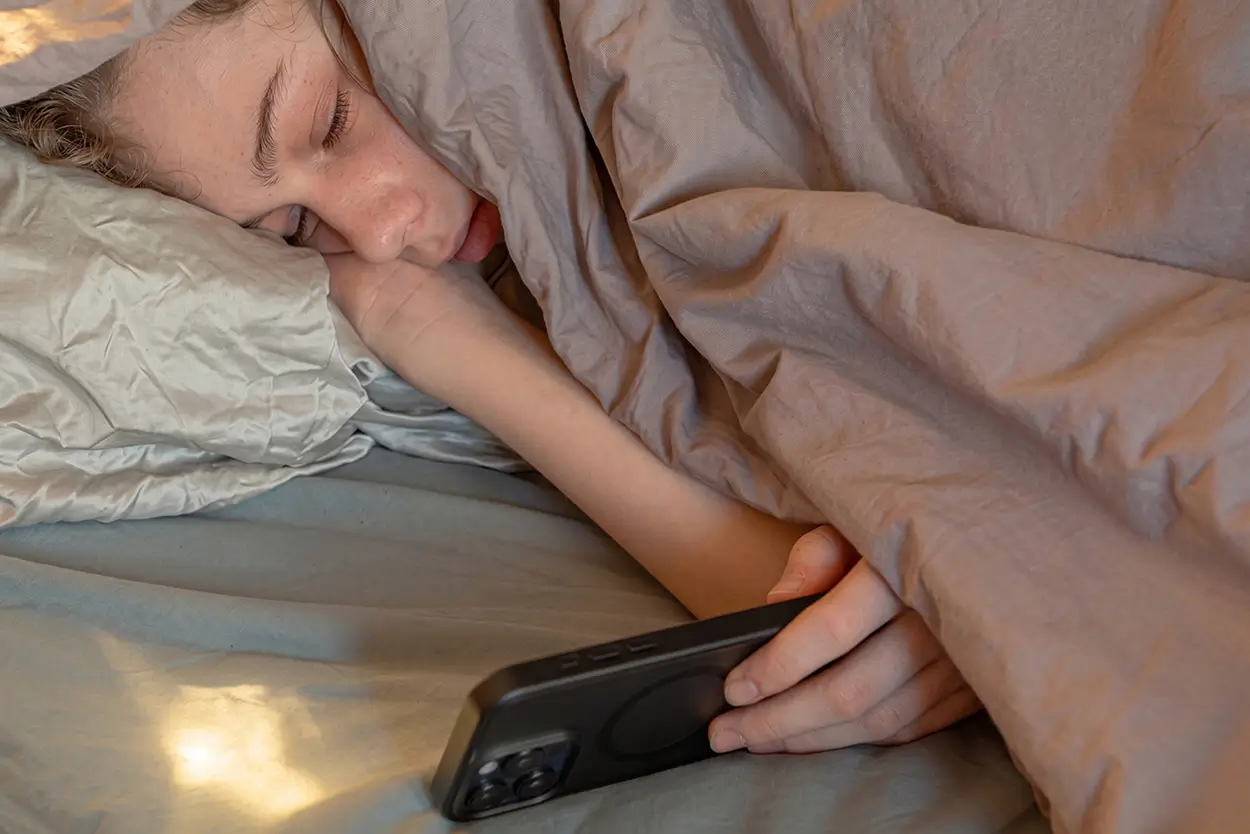
Then there’s sleep. A phone within reach at midnight makes it very easy for “five more minutes” to turn into much longer. Poor sleep can affect attention, energy, mood, and the ability to handle stress the following day.
Rather than assuming the phone itself is the entire problem, parents can look at what is happening around its use.
Finding a Balance That Works at Home
Rules around technology tend to work better when they’re realistic enough for the family to follow consistently.
That might mean phones stay away from the dinner table. Devices could charge outside bedrooms overnight. A child who has been gaming for a while may need a break to move around, eat, or do something else.
Parents can model those boundaries too. It’s difficult to convince a child that dinner should be device-free when adults are checking messages throughout the meal.
Conversations matter as well. Ask children what they enjoy online. Talk about what bothers them. With teens, conversations about privacy, social pressure, and what they see on social media can be more useful than simply counting minutes.
The aim of healthy screen time for kids isn’t to make technology disappear. It’s to make sure screens don’t replace the everyday experiences that help children grow and thrive.
When Screen Time Isn’t the Only Factor
It’s easy to assume that screen time is the cause whenever a child’s behavior begins to change. Sometimes that’s true, but it’s not always the full explanation.
A teen who spends hours alone on a phone may be struggling with anxiety, depression, or other emotional challenges. A child who has difficulty stepping away from a game may also be dealing with attention, emotional regulation, or social concerns. In some cases, sleep problems contribute to increased screen use, while late-night screen time can make healthy sleep even harder to maintain.
That’s why ongoing irritability, withdrawal, anxiety, declining school performance, significant changes in sleep, or a loss of interest in activities shouldn’t automatically be blamed on technology alone.
If these changes continue or begin interfering with everyday life, a mental health evaluation can help families better understand what’s contributing to them. Screen habits may be part of the situation, but they’re not always the underlying cause.
Pediatric Mental Health Support for Houston-Area Families
Texas Pediatric Mental Health provides evidence-based evaluations and individualized care for children and adolescents throughout the Houston area who have concerns about screen time and children’s mental health. Our team provides pediatric mental health support in Texas for children experiencing sleep difficulties and other emotional or behavioral concerns.
If screen habits have become difficult to manage, or you’ve noticed changes in your child’s sleep, mood, school performance, or daily behavior, contact Texas Pediatric Mental Health to schedule an evaluation and gain a clearer understanding of your child’s needs.