
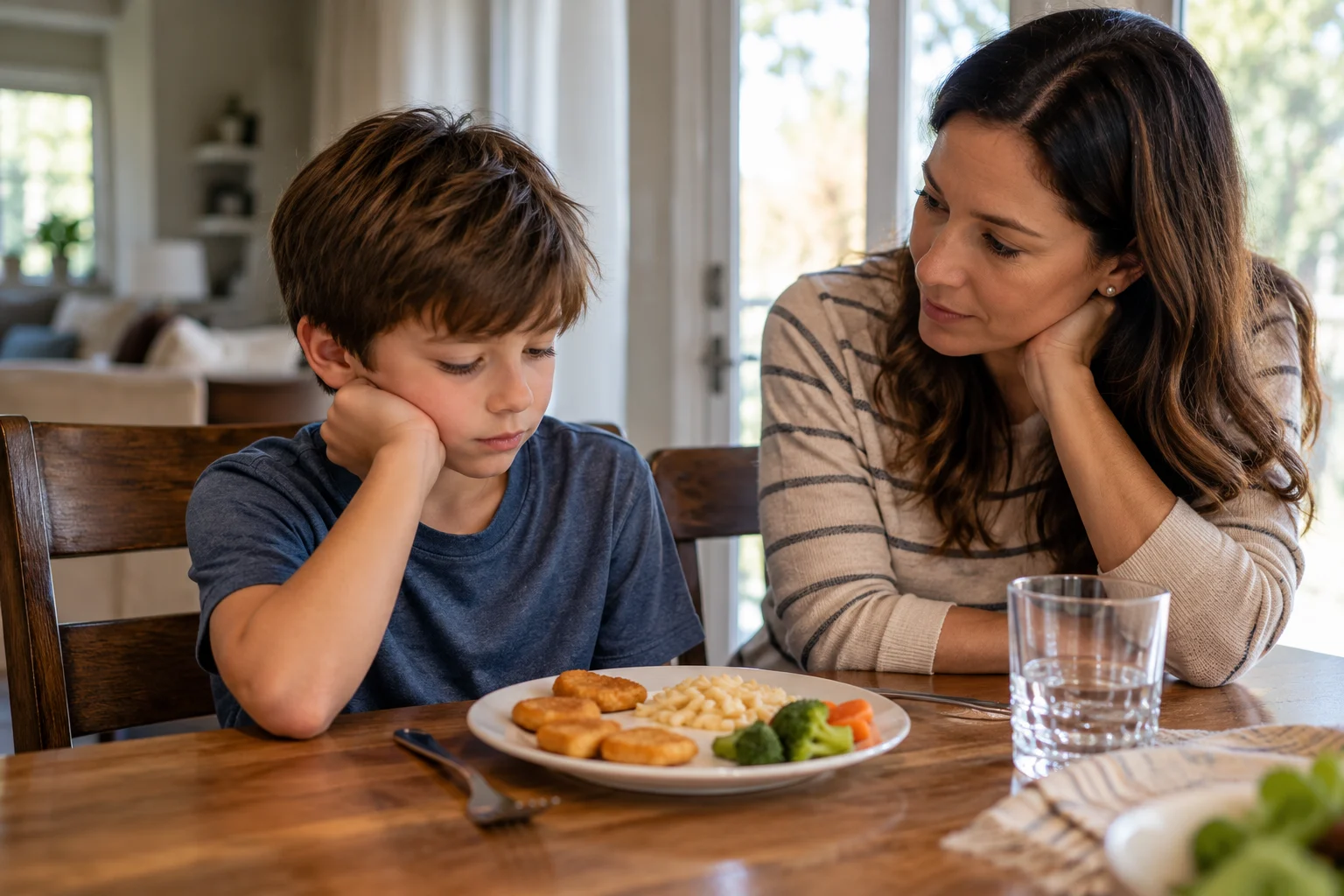
Some children refuse broccoli one week and ask for it the next. Others rely on the same few foods for months, panic when a familiar brand changes, or stop eating after a frightening choking experience. When meals become a daily source of worry, parents may wonder whether this is a difficult phase or something more serious. Understanding the difference between picky eating and avoidant/restrictive food intake disorder (ARFID) can help families decide when to ask for support.
When Picky Eating Is Part of Growing Up
Food preferences often shift during childhood. A child may reject unfamiliar textures, resist vegetables, or insist that foods stay separate on the plate. These behaviors can be frustrating, but many children still get enough nutrition from the foods they accept, grow as expected, and participate in family and school routines.
The number of foods a child likes is only one part of the picture. A child who refuses several vegetables but still eats a sufficiently varied diet may need patient, ordinary feeding support rather than an eating-disorder evaluation. What deserves closer attention is a pattern of restriction that compromises nutrition, growth, or daily functioning, or that creates intense distress around eating.
What Is ARFID in Children?
Avoidant/restrictive food intake disorder (ARFID) is an eating disorder characterized by food avoidance or restriction that leads to significant nutritional or functional difficulties. These consequences may include inadequate nutritional intake, weight loss or poor growth, nutritional deficiencies, dependence on nutritional supplements or tube feeding, and significant difficulties with social activities or daily life. Unlike anorexia nervosa, ARFID is not driven by fear of weight gain or dissatisfaction with body shape.
A child with ARFID may be interested in eating but unable to tolerate particular tastes, smells, temperatures, or textures. Another may fear choking, vomiting, or pain after a distressing experience. Some children have very little interest in food, making it difficult for them to eat enough. These presentations can overlap, and none should be interpreted as stubbornness or bad parenting.
Picky Eating vs. ARFID: What Makes the Difference?
The clearest distinction is not whether a child refuses new foods. It is the severity and consequences of the restriction. Typical picky eating can be challenging for families, but ARFID involves clinically significant problems with nutrition, growth, dependence on nutritional support, or psychosocial functioning.
For example, a child may eat only a few preferred foods yet maintain growth and participate comfortably in meals with friends. Another child might avoid birthday parties because they cannot tolerate the foods being served, struggle to eat during school hours, or experience escalating anxiety when preferred foods are unavailable. A child can have ARFID without looking underweight, so appearance alone is not a reliable screening tool.
These differences can help parents recognize concerns, but they are not enough to make a diagnosis at home. Medical conditions, swallowing problems, food allergies, gastrointestinal symptoms, autism-related sensory differences, and other feeding concerns can also influence what a child eats. A clinician needs to understand the full pattern before deciding whether ARFID or another explanation fits.
Signs That Restricted Eating May Need Attention
Parents may notice that the list of accepted foods keeps shrinking, meals take an unusually long time, or a child becomes distressed by small changes in packaging or preparation. Some children gag or become fearful when unfamiliar food is nearby. Others may regularly skip meals instead of eating unfamiliar or nonpreferred foods, even when they are hungry.
Physical warning signs may include fatigue, dizziness, constipation, poor growth, or nutritional deficiencies. However, these symptoms can have several possible causes. School and social effects matter too: avoiding sleepovers, field trips, restaurants, or shared meals can signal that food restriction is affecting a child’s life beyond the dinner table. A pattern of significant distress or impairment warrants a conversation with a healthcare professional.
Why a Child May Avoid Food
Sensory sensitivities are one possible reason children avoid certain foods. A child may experience the texture of a mixed dish or the smell of a certain food as overwhelming, even when the rest of the family barely notices it. Fear is another pathway: after choking, vomiting, or experiencing painful swallowing, a child may associate eating with danger.
A limited appetite or lack of interest in food can also contribute, especially when the child rarely notices hunger or finds meals unrewarding. These experiences may occur alongside developmental, anxiety, or medical concerns, but they should not be reduced to a single cause without assessment. Understanding what the child experiences during meals is more helpful than assuming the child is trying to control the household.
What Parents Can Do Before an Appointment
Start by observing your child’s eating habits without making mealtimes feel stressful or overwhelming. Keep a brief record of foods and drinks your child accepts, foods they avoid, any distress or physical symptoms, and how eating affects school and family activities. Include changes over time, such as a sudden drop in accepted foods or difficulty eating after an illness.
Avoid forcing your child to take bites, bargaining over food, or making them feel ashamed of their eating habits. Pressure may increase distress, especially when fear or sensory discomfort is involved. Maintain regular mealtimes and a calm eating environment while seeking professional guidance to ensure your child receives adequate nutrition. If your child is already struggling to eat enough, do not attempt restrictive food experiments or remove reliable foods without professional guidance.
When to Seek Medical or Mental Health Support
Contact your child’s pediatrician when food restriction is persistent, worsening, or affecting growth, nutrition, energy, school attendance, or social activities. An assessment can review growth patterns, medical history, swallowing or gastrointestinal concerns, and possible nutritional deficiencies. Depending on the findings, the pediatrician may involve a registered dietitian, a mental health clinician, or a feeding specialist.
Seek prompt medical attention if your child shows signs of dehydration, faints, becomes unusually weak, or cannot maintain adequate food or fluid intake. These concerns should not wait for a routine mental health appointment. Even without urgent symptoms, early evaluation can help families avoid months of guessing about whether a child will simply outgrow the difficulty.
How ARFID Treatment Can Help
Treatment is tailored to each child’s needs rather than following a one-size-fits-all approach. Care may combine medical monitoring, nutritional rehabilitation, behavioral or cognitive behavioral approaches, and gradual, supported work with feared or unfamiliar foods. For younger children, caregivers often play an important role in helping treatment strategies fit everyday routines.
The aim is not to make a child eat every food or to turn mealtimes into a test of obedience. It is to support adequate nourishment, reduce distress, and make eating more flexible and manageable. Progress may take time, especially when sensory sensitivities, anxiety, and medical concerns occur together.
A Better Next Step Than Another Mealtime Battle
When a child’s eating habits become concerning, understanding how food restriction affects their health, development, and daily activities is an important first step. Recognizing these challenges can help families respond with patience and seek appropriate support rather than treating the behavior as ordinary picky eating.
Texas Pediatric Mental Health supports families navigating emotional and behavioral health concerns in children. Learn more about the practice’s eating disorder services or contact the care team to discuss whether a professional evaluation may be appropriate for your child.